
Stop Chasing Losses: Escape the Revenge Trade Trap
You lose $500 on a stock trade. Your stomach drops. That first instinct is pure fire—you want to double down, win it back, get even. That’s chasing losses, a brutal loop of loss aversion and the sunk cost fallacy that destroys portfolios and sanity. It’s emotional trading at its rawest, a revenge trade against the market that you never win. But here’s the twist: you don’t have to be a victim of your own wiring. We’re about to unpack why you do it, how to stop, and why a Go master—Shin Jin-seo—offers the most shocking lesson. Backed by reports from the Korea Times on elite-level psychology, this is a story of cold control over hot emotion.
The Psychology of Loss-Chasing
Loss-chasing isn’t a rational calculation; it’s a primal, emotional trap. The engine behind this destructive behavior is a cocktail of cognitive biases, primarily loss aversion and the sunk cost fallacy, all fueled by a desperate need to protect the ego. Research in behavioral economics, notably the work of Kahneman and Tversky, shows that the pain of a loss feels roughly twice as powerful as the pleasure of an equivalent gain. This isn’t just a feeling; it’s a hardwired response that distorts judgment.
Contrast this with the ‘cold’ decision-making of AI. A machine doesn’t feel the sting of a loss. It doesn’t have an ego to bruise. It simply recalculates the probabilities. A human trader, on the other hand, might keep buying the dip, not because the data supports it, but because they cannot accept the reality of a bad trade. They’re trying to ‘win it back,’ a move that often leads to a catastrophic margin call. As one behavioral economist put it, “The human mind is a story-teller, not a calculator. It prefers a losing narrative to a broken identity.” This is why AI, with its lack of emotional baggage, can exploit human desperation. A commentator from the Go match even noted that AI’s ‘too perfect’ nature revealed a distinct weakness in humans: the inability to pivot without the weight of past mistakes.
Why We Feel the Urge to ‘Win It Back’
When you lose money, your brain doesn’t pause for a spreadsheet. It goes into a primitive fight or flight mode. The amygdala, your brain’s emotional alarm center, hijacks the prefrontal cortex, the region responsible for logic and planning. It’s like a smoke alarm going off in a kitchen; you don’t need to douse the whole house, but your body is screaming for a drastic action. This neural takeover disrupts emotional regulation, replacing calculated risk assessment with a desperate, impulsive urge to immediately reverse the loss. You aren’t thinking; you are reacting to an emotional fire that feels like a threat to your survival.
The Sunk Cost Fallacy in Action
This is the sunk cost fallacy at its most painful: the escalation of commitment to a losing proposition. A classic example is the trader who holds a losing stock for months, refusing to sell because they can’t bear to make the loss real. They’re not analyzing the stock’s future; they’re trying to validate their past decision. Contrast this with the mindset of Shin Jin-seo, who, after losing Game 1, didn’t try to ‘win it back’ with aggressive desperation. He changed his entire strategy. As one Korea Times analysis noted, “The AI’s weakness is that it is too perfect. It doesn’t take desperate risks.” By not chasing the loss, Shin played like the machine, while his opponent was trapped in the emotional quicksand of trying to recover what was already gone.
The High Cost of Chasing Losses
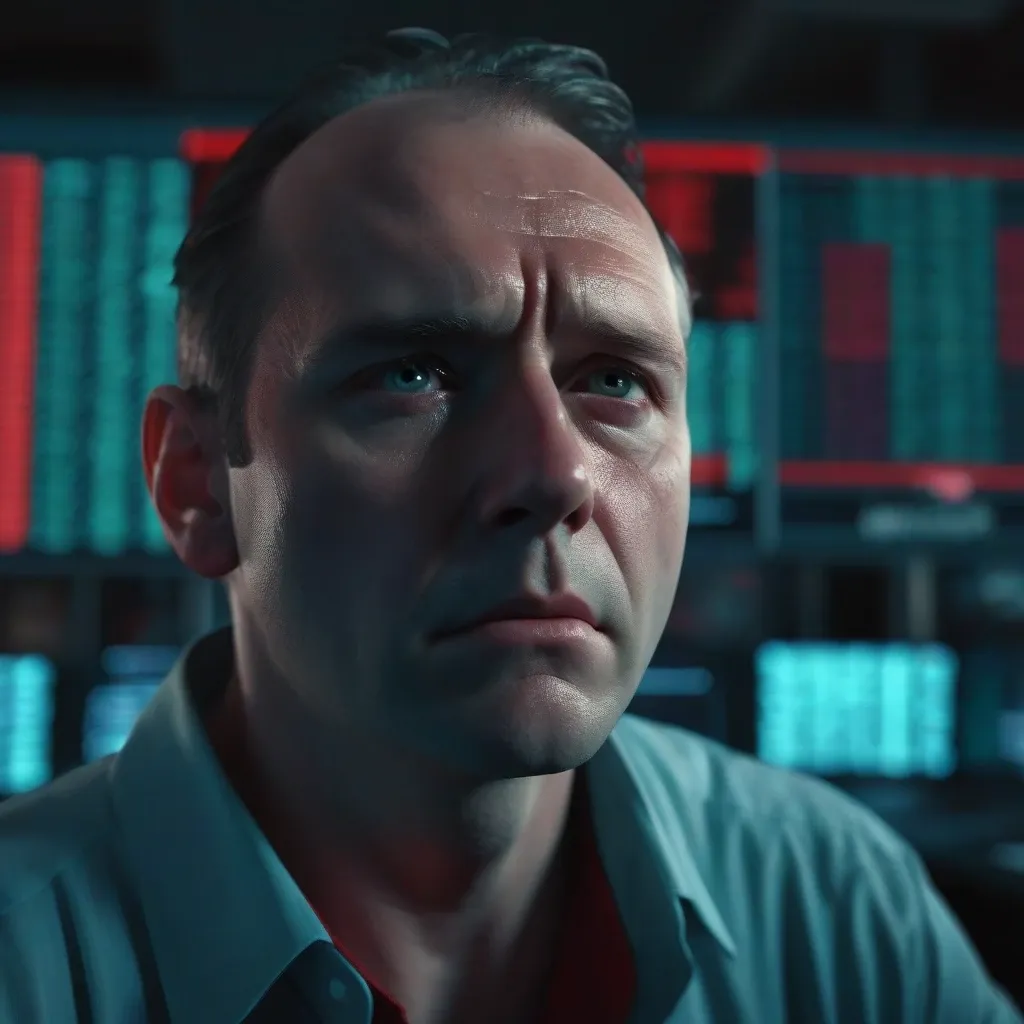
It starts with a twitch. A tick in the green line that flips red, then deeper red. The trader, let’s call him Mark, loses $500 on a shaky earnings call. He doesn’t blink—he doubles down, buying more shares at a “discount.” The stock drops another 4%. Now he’s down $1,400. He triples down. By the close, Mark’s account has hemorrhaged 20% of its value in one afternoon. This is the loss spiral: a psychological sinkhole where rational thinking evaporates and the only goal becomes “getting even.” The consequences of chasing are brutal—eroded confidence, blown-up capital, and a fog that clouds every future decision. Studies show that over 80% of day traders who chase losses report larger drawdowns than those who cut their losses early. The math is ugly: you need a 100% gain to recover from a 50% loss. Even Shin Jin-seo, the world No. 1 in Go, faced a 1–0 deficit in a championship match—and didn’t chase. He reset, re-evaluated, and let the next move come naturally. That discipline? It’s the real edge. Chasing isn’t strategy; it’s gambling’s ugly cousin, wearing a cheap suit of desperation. The opportunity cost is what you could’ve done with that capital: a better entry, a different market, or just sitting out. Don’t mistake stubbornness for grit.
The Shin Jin-seo Example: A Masterclass in Not Chasing
Let’s get one thing straight: when the top Go player on Earth, Shin Jin-seo, sat down against the KataGo AI, nobody was handing him the trophy. Game 1 went exactly as expected—a brutal loss for the human. The machine was cold, precise, and utterly unforgiving. But here’s where the story flips. Instead of spiraling into desperation, Shin calmly reset. He won Games 2 and 3 under a two-stone handicap, pulling off a comeback that felt more like a strategy lesson than a sports miracle. His own words cut through the hype: “I don’t think this compares with Lee Sedol’s victory, but it shows humans can still hold their own.” He didn’t scream or pound the table. He analyzed. Shin pointed out something wild—AI’s “perfection” is actually a weakness. It never takes desperate risks. When humans are losing, they tend to panic and double down. Not Shin. According to the Korea Times coverage, his win probability in Game 3 never dipped below 95%. That’s not luck. That’s refusing to chase the pain of a bad loss with a worse move. It’s a masterclass in emotional discipline, where staying calm beats trying to “get even” every single time.
What Shin Did Differently After His Loss
Most people, after getting crushed by an AI, would smash the keyboard or go on a tilt-fueled rampage. Shin did the opposite. He didn’t seek revenge; he sought understanding. That gap between Game 1 and Game 2 wasn’t just a break—it was months of intense post-loss analysis. Shin spent that time studying KataGo’s patterns, not to copy them, but to find their blind spots. He adjusted his entire approach, trading brute force for patient positioning. A commentator nailed it: “By constantly training with AI, humans have continued to evolve.” Instead of chasing the ghost of his first loss, Shin let the loss teach him. He flexed his discipline, not his ego. That’s the difference between a tantrum and a turnaround.
Actionable Strategies to Stop Chasing Losses
Pre-Commit to Hard Rules
Before you even click a single trade, lock yourself into a cage of pre-commitment. This is non-negotiable. Think of it like Shin Jin-seo accepting a two-stone handicap before a match. He didn’t wait until he was losing to decide if he needed the crutch; he set the rule upfront. For you, this means automating failure. Set a maximum loss per day or per week using a hard stop-loss or a limit order on your platform. The moment you hit that -2% or -$200 red line, the platform should literally refuse to execute another trade. Don’t rely on willpower when the losses are burning your brain. Use an automatic stop-loss on every position. The action step is simple: open your trading platform right now, set a “daily loss limit” feature if it exists, or write a sticky note on your monitor: “If I lose X amount today, I am done.” No exceptions. You are creating a mechanical ceiling so your emotions cannot crash through it.
Use a Post-Loss Cool-Down
The second you take a loss, your brain chemistry shifts into a frantic scramble for dopamine—the revenge trade. This is the exact moment you need to walk away. The science is brutal: the amygdala hijacks the prefrontal cortex, making rational decisions impossible. You need a timeout. Look at Shin Jin-seo; he takes deliberate breaks between games when he feels the momentum slipping. He doesn’t just jump into the next round. For you, this means a mandatory cooling-off period. The action step: after every losing trade that hits your stop-loss, you must step away from the screen for at least 30 minutes. No checking charts, no looking at crypto twitter, no refreshing your portfolio. Go make a coffee, do ten push-ups, or stare at a wall. Let the cortisol drop. This is emotional regulation through physical separation. If you lose more than 2% of your account, make it a 24-hour ban. Create your own two-stone handicap: “If I lose 2%, I step away for a full day.” It feels extreme. It works.
Reframe Losses as Data
Stop viewing a loss as a failure. That mindset is toxic and leads directly to chasing losses. Instead, treat every loss as a piece of cold, hard data. Shin Jin-seo once noted that “AI’s weakness is that it is too perfect.” He saw a flaw in the supposed perfection and used the loss—the data point of AI’s pattern—to exploit it later. He didn’t cry about the loss; he studied it. You need a growth mindset. The action step: start a trading journal. It doesn’t need to be fancy. A simple notebook or a Google Doc. After every trade, especially losing ones, answer this one prompt: “What did the market teach me?” Write it down. Look for the pattern. Did you break a rule? Did you ignore a volume signal? The market is a brutal teacher; the only way to pass the class is to take notes. When you reframe losses as data-driven learning experiences, the emotional sting fades and the rational analysis takes over. You stop chasing losses because you are too busy collecting information to exploit later.
Building a Resilient Mindset
Long-term success in any high-stakes arena—trading, competitive Go, or even life—doesn’t come from obsessively chasing wins. It comes from a gritty, almost stubborn focus on the grind. This is the core of resilience: emotional detachment from the result. Elite performers, like professional Go player Shin Jinseo, operate with a quiet stoicism that most amateurs miss. Shin famously reflected, “I still can’t say with confidence that I can consistently beat KataGo with a two-stone handicap.” That’s not self-doubt; that’s radical acceptance of uncertainty. He doesn’t pretend to control the chaos. He just focuses on the next move. This mindset is the bedrock of resilience—acknowledging that you can’t force the universe to comply, but you can force yourself to make a good decision. It’s a little chaotic, yes, but it frees you from the emotional rollercoaster of winning and losing. You detach from the outcome so you can fully commit to the process. That’s where real power lies.
The Power of Process Over Outcome
Think of a professional poker player who gets all-in with pocket aces pre-flop. They’re a massive favorite. If the river card is a deuce and their opponent hits a straight, they lose. Did they make a bad play? No. The quality of the decision is judged by the process, not the random result. This is probability thinking. It’s the same reason Shin shows that post-match humility—he knows he can dominate the board for 200 moves but lose on the 201st due to a tiny misread. He evaluates his choices, not the scoreboard. You need to do the same: detach your ego from the win column. Make the right bet. Make the right move. The long-term results will follow the process, even if the short-term outcome stings like hell.
Conclusion
So here’s the raw truth: chasing losses feels inevitable, but it’s a trap you can sidestep. The three pillars—grasping the psychology behind that desperate urge, taking a hard look at Shin Jin-seo’s cold discipline, and locking in actionable rules—aren’t just theory. They’re your lifeline. When the market tanks or the game slips, the impulse to double down screams loud. Don’t listen. Pre-commit to a plan before the chaos hits. Build a resilient mindset that treats losses as data, not disasters. That shift—from emotional reaction to calculated pause—is everything. Next time you face a loss, pause. Don’t chase. Ask yourself: what would Shin Jin-seo do? Then do that. It’s not about never losing; it’s about never letting the loss own you. Break the cycle, trade sharp, and play like a champion.